Commercial Property Trends Affecting Digital Restaurants
Digital restaurants are changing how food businesses choose, use, and manage commercial property. Online ordering, delivery platforms, cloud kitchens, automated operations, and data-driven customer experiences are creating new demands for restaurant locations and building infrastructure. In Lagos and across Nigeria, restaurant operators must increasingly consider internet connectivity, power reliability, delivery access, kitchen efficiency, occupancy costs, and flexible leases when selecting commercial property. Understanding these trends can help food entrepreneurs choose properties that support digital growth without creating unnecessary operating expenses.
What Is a Digital Restaurant?
A digital restaurant uses technology to manage a significant part of its customer experience, sales process, or daily operations.
It may operate as a traditional dine-in restaurant with digital ordering, a delivery-focused kitchen, a takeaway business, or a hybrid model combining several channels.
Common features include:
- Online ordering
- Delivery-platform integration
- Digital payments
- Cloud-based point-of-sale systems
- Kitchen display systems
- Inventory management software
- Customer relationship management
- Digital marketing
- Automated reporting
- Data-driven site selection
These capabilities affect the type of commercial property a restaurant needs.
A business that generates most of its revenue through delivery may not require the same location, frontage, parking, or customer seating as a premium dine-in restaurant.
The key is to match the property to the restaurant’s actual operating model.
1. Growth of Delivery-Focused Kitchen Locations
One important property trend is the growing importance of locations selected for delivery efficiency rather than traditional walk-in traffic.
A delivery-focused restaurant may prioritize proximity to its target customers, rider access, kitchen infrastructure, and manageable occupancy costs.
Its property requirements may include:
- Efficient kitchen space
- Refrigeration
- Dry storage
- Reliable electricity
- Water supply
- Adequate drainage
- Ventilation
- Packaging stations
- Dispatch access
- Reliable internet
For example, a delivery-focused business serving customers across parts of Lekki may evaluate locations based on delivery coverage and travel times rather than paying a premium for a prominent high-street frontage.
However, a cheaper property is not automatically better. Poor road access, traffic bottlenecks, or an unsuitable delivery catchment can undermine the business model.
2. Demand for Cloud Kitchen Properties
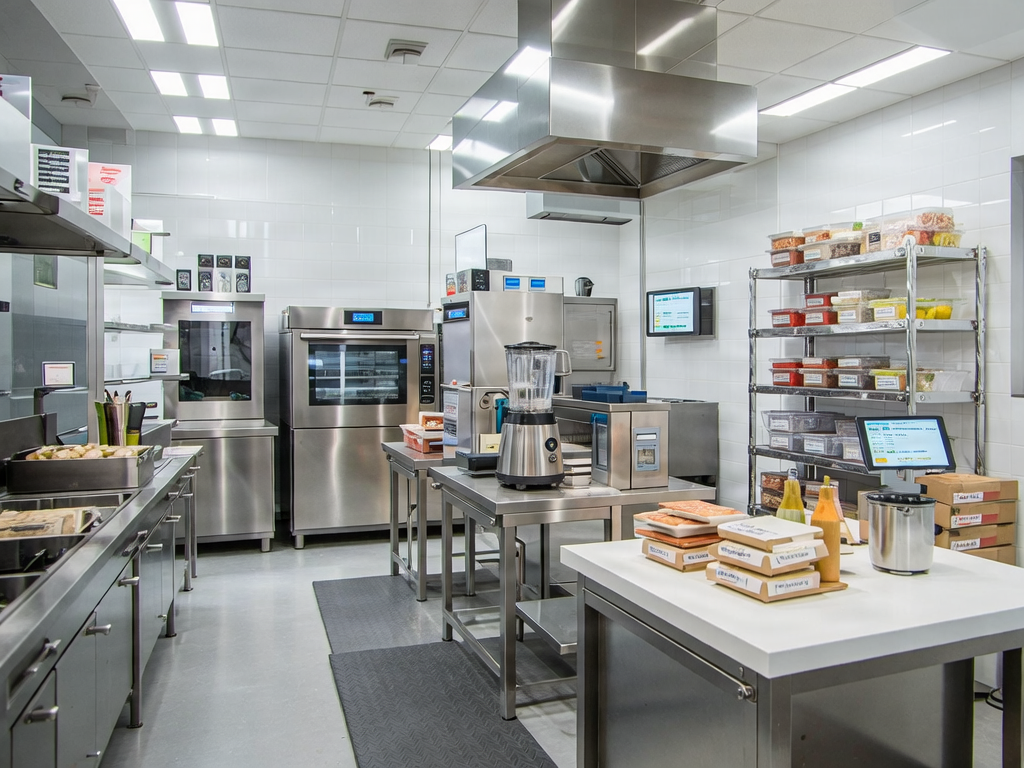
Cloud kitchens are commercial food-production spaces designed primarily for preparing orders for delivery or collection.
They may support one restaurant brand or multiple brands operating from the same facility.
This model changes commercial property requirements because customer dining space may be limited or unnecessary.
Important property features include:
- Efficient production layouts
- Multiple preparation stations
- Cold storage
- Food-safe surfaces
- Commercial extraction
- Adequate electrical capacity
- Waste-management facilities
- Delivery pickup areas
- Staff facilities
- Space for equipment maintenance
Shared kitchen facilities may also appeal to entrepreneurs who want to test a food concept before committing to a standalone restaurant.
Before leasing, operators should confirm that the property permits the intended food-production activities and can meet applicable safety, building, and operational requirements.
3. Internet Connectivity Is Becoming a Core Property Requirement
Digital restaurants depend on connectivity for many daily activities.
Internet access can support:
- Online orders
- Payment processing
- Digital menus
- Kitchen display systems
- Inventory management
- Delivery platforms
- Cloud accounting
- Security systems
- Customer communications
An unreliable connection can disrupt order processing and delay service.
During a property inspection, check the availability of internet service providers, installation requirements, network coverage, and backup connectivity options.
For a digital restaurant, internet infrastructure should be evaluated alongside electricity, water, and drainage.
4. Power Reliability Influences Property Selection
Digital restaurant operations require electricity for more than cooking and refrigeration.
Power may also support routers, payment terminals, computers, security cameras, order printers, kitchen displays, and connected equipment.
In Nigeria, restaurant operators may need to combine grid electricity with generators, inverters, batteries, or solar systems.
When assessing commercial property, consider:
- Existing electrical capacity
- Generator infrastructure
- Backup power arrangements
- Fuel storage and safety requirements
- Solar installation potential
- Battery installation space
- Equipment protection
- Maintenance access
A property with appropriate infrastructure may require fewer expensive modifications before opening.
However, the best energy configuration should be determined from the restaurant’s actual load requirements and operating hours.
5. Smaller Customer Areas and More Efficient Floor Plans
Digital ordering can change the way restaurants use their floor space.
A delivery-focused operation may allocate more area to preparation, storage, packaging, and dispatch rather than dining.
A hybrid restaurant may need both a productive kitchen and a smaller, efficient collection area.
This can influence the amount of space a business needs to lease.
Restaurant operators should assess the proportion of space dedicated to:
- Food preparation
- Cooking
- Refrigeration
- Dry storage
- Packaging
- Customer seating
- Collection
- Delivery dispatch
- Staff facilities
The objective is to avoid paying for space that does not contribute sufficiently to the business model.
Nevertheless, space reduction should never compromise food safety, staff movement, ventilation, or operational capacity.
6. Flexible Commercial Leases Are Becoming More Valuable
Digital restaurant concepts can change quickly.
A business may begin with delivery, add takeaway service, introduce limited seating, or expand into additional production space.
Long-term property commitments can be challenging when demand and operating requirements remain uncertain.
Restaurant operators may therefore explore lease arrangements that offer suitable flexibility, such as:
- Renewal options
- Expansion rights
- Break clauses where negotiable
- Fit-out periods
- Clearly defined rent-review terms
- Permission for additional equipment
- Assignment provisions
- Options to lease adjacent space
The availability of these terms depends on the landlord, property, market conditions, and negotiation.
Any proposed flexibility should be documented in the lease rather than left to informal promises.
7. Location Strategy Is Becoming More Data-Driven
Digital restaurants generate information about orders, customer locations, delivery times, sales patterns, and product demand.
This information can help businesses make better property decisions.
For example, order data may reveal that a restaurant receives substantial demand from a particular neighbourhood but takes too long to deliver there.
The business could investigate whether a strategically located production facility would improve delivery performance.
Useful location-analysis inputs include:
- Customer order density
- Average delivery distance
- Travel-time patterns
- Customer purchasing behaviour
- Competitor locations
- Residential concentration
- Office districts
- Supplier access
- Occupancy costs
Customer data should be analyzed appropriately, with suitable privacy and security protections.
The objective is to locate facilities where customer demand, delivery economics, and property costs work together.
8. Multi-Brand Kitchen Facilities
Some operators use one kitchen facility to prepare food for several restaurant brands.
This can increase the usefulness of a single property, provided the operation is carefully designed.
A multi-brand kitchen may require:
- Separate preparation workflows where necessary
- Sufficient refrigeration
- Shared storage management
- Clear inventory controls
- Adequate cooking capacity
- Efficient packaging stations
- Order-routing technology
- Effective cleaning procedures
The property must be able to support the combined operational requirements of the brands.
Operators should not assume that a space suitable for one restaurant will automatically support several concepts at peak demand.
Capacity planning, food safety, ventilation, and equipment requirements should be assessed before committing to the property.
9. Delivery Access Is Becoming a Critical Building Feature
Digital restaurant sales depend heavily on the movement of food from the kitchen to the customer.
Poor dispatch arrangements can create congestion and delay orders.
When evaluating a property, assess:
- Rider access
- Pickup locations
- Parking or waiting areas
- Road accessibility
- Entrance design
- Loading access
- Packaging workflow
- Security arrangements
A dedicated collection point can reduce interference between delivery riders and dine-in customers.
In busy areas of Lagos, the practical accessibility of a property may be just as important as its distance from customers.
10. Demand for Smart Building Infrastructure
Digital restaurants can benefit from buildings that support connected equipment and automated monitoring.
Potential features include:
- Smart electricity meters
- Refrigeration temperature sensors
- Automated lighting
- HVAC controls
- Water-leak detection
- Security cameras
- Digital access control
- Generator monitoring
- Solar and battery monitoring
These systems can help managers monitor conditions and respond to problems more quickly.
However, technology should be selected based on operational needs and financial value.
A small takeaway business may need only a few monitoring devices, while a large central kitchen may benefit from more comprehensive systems.
11. Cold Storage and Inventory Infrastructure
Digital ordering can increase the importance of inventory accuracy.
A restaurant that receives orders through multiple channels must know which ingredients are available and how much stock is needed.
The property should provide appropriate space for:
- Dry storage
- Refrigeration
- Freezing
- Receiving deliveries
- Inventory inspection
- Packaging
- Stock rotation
Cold-storage requirements are especially important for businesses handling perishable ingredients or preparing food in high volumes.
Inventory technology works best when the physical storage system is well organized and staff follow consistent procedures.
12. Energy Efficiency Is Becoming a Competitive Advantage
Digital restaurants often operate across extended hours or process substantial order volumes through limited space.
Energy costs can therefore have a significant effect on profitability.
Property features that may support efficiency include:
- Energy-efficient refrigeration
- LED lighting
- Appropriate ventilation
- Efficient air conditioning
- Good insulation
- Suitable electrical infrastructure
- Solar readiness
- Energy monitoring
For delivery kitchens, the aim is to avoid spending excessive capital on customer-facing features that do not contribute to the business model while investing appropriately in productive infrastructure.
13. Commercial Kitchens as Shared Infrastructure
Another potential opportunity is the development of shared commercial kitchen facilities.
These spaces can provide food entrepreneurs with access to professional kitchens without requiring each business to lease and equip an entire facility independently.
Depending on the operator, facilities may offer:
- Commercial cooking equipment
- Refrigeration
- Preparation stations
- Dry storage
- Cleaning facilities
- Packaging areas
- Dispatch access
- Utilities
- Flexible booking arrangements
For property owners, this model may create opportunities to serve multiple food businesses from a suitably designed facility.
However, shared kitchens require careful management of capacity, hygiene, scheduling, storage, security, and permitted activities.
14. Digital Restaurants Need Better Operational Zoning
A restaurant handling dine-in, takeaway, and delivery simultaneously can experience congestion if its layout is poorly planned.
A well-designed property may separate:
Receiving: Ingredients and supplies enter the facility.
Storage: Inventory is stored appropriately.
Preparation: Staff prepare ingredients.
Cooking: Orders are produced.
Packaging: Food is packaged for collection or delivery.
Collection: Customers or riders receive completed orders.
Waste handling: Waste moves through a designated route.
Good zoning can reduce unnecessary movement and help maintain hygiene.
The layout should be assessed before signing the lease because structural limitations can make later modifications expensive.
15. The Rise of Smaller Urban Production Hubs
Some digital restaurant businesses may explore multiple smaller kitchens closer to their customers instead of operating one large central facility.
The objective may be to reduce delivery distances or serve several customer catchments.
However, this strategy introduces additional property and management costs.
Before opening another location, compare:
- Additional rent
- Equipment investment
- Staffing
- Utilities
- Inventory duplication
- Maintenance
- Delivery savings
- Expected order volume
- Management complexity
A second kitchen makes sense only if the improvement in service, revenue, or delivery economics justifies the additional costs.
16. Commercial Property Owners Must Adapt
These trends also affect landlords.
A building designed exclusively for traditional dine-in restaurants may not meet the requirements of a digital food operator.
Property owners can improve suitability by considering:
- Adequate electrical capacity
- Reliable water supply
- Good drainage
- Suitable kitchen exhaust routes
- Waste-management areas
- Internet installation options
- Delivery access
- Flexible internal layouts
- Appropriate equipment areas
Landlords should also establish clear rules for kitchen alterations, signage, utility use, delivery operations, and maintenance.
A property that accommodates a broader range of legitimate food business models may appeal to more potential tenants.
17. Measure Property Performance Using Digital Data
Digital restaurants can use operational data to evaluate whether a property is supporting business objectives.
Useful indicators include:
| KPI | What it reveals |
|---|---|
| Orders per day | Demand handled by the location |
| Average delivery time | Efficiency of order fulfilment |
| Delivery cost per order | Cost of serving customers |
| Sales per square metre | Revenue generated by occupied space |
| Occupancy cost ratio | Property costs relative to revenue |
| Energy cost per order | Energy efficiency of operations |
| Order accuracy | Effectiveness of kitchen and dispatch processes |
| Equipment downtime | Reliability of key infrastructure |
These measures should be reviewed together.
For example, a property may generate high order volume but still be unattractive if delivery costs, rent, and power expenses consume too much of the revenue.
7 Property Features Digital Restaurants Should Prioritize
- Reliable internet: Supports ordering, payments, reporting, and connected equipment.
- Suitable power infrastructure: Protects refrigeration, kitchen operations, and digital systems.
- Efficient kitchen layout: Improves production flow and order fulfilment.
- Dedicated delivery access: Reduces congestion and helps orders move efficiently.
- Appropriate refrigeration: Supports food safety and inventory management.
- Flexible lease terms: Provides room to adapt the business model.
- Scalable infrastructure: Supports additional equipment, increased production, or future expansion.
How to Choose the Right Property for a Digital Restaurant
Step 1: Define the Operating Model
Decide whether the business will focus on delivery, takeaway, dine-in, or a combination.
Step 2: Map Customer Demand
Use available order data, customer research, and location analysis to identify the areas the restaurant needs to serve.
Step 3: Establish Property Requirements
Determine kitchen size, storage, utilities, ventilation, dispatch access, and equipment requirements.
Step 4: Calculate Total Occupancy Cost
Include rent, service charges, utilities, fit-out, maintenance, and other property-related expenses.
Step 5: Inspect Infrastructure
Check power, water, drainage, ventilation, internet options, waste facilities, and building condition.
Step 6: Test the Delivery Model
Estimate travel times, delivery coverage, rider access, and order-handling capacity.
Step 7: Negotiate the Lease
Confirm permitted use, fit-out rights, operating hours, utility responsibilities, and renewal provisions.
Step 8: Monitor Performance After Opening
Track order volumes, delivery times, energy costs, occupancy costs, and equipment reliability to determine whether the location is performing as expected.
Conclusion
Digital restaurants are changing commercial property requirements by placing greater emphasis on kitchen productivity, internet connectivity, power reliability, delivery access, flexible leases, and data-driven location decisions.
For food entrepreneurs in Lagos and across Nigeria, the best property depends on the business model. A delivery-focused kitchen may prioritize operational efficiency and delivery coverage, while a dine-in restaurant may require visibility, ambience, parking, and a strong customer experience.
The most effective strategy is to select a property that supports the restaurant’s revenue channels without creating unnecessary occupancy costs or operational limitations.
Commercial real estate is no longer just the physical location of a restaurant. For digital food businesses, it is part of the technology, logistics, and operating system that determines how efficiently the business serves customers and grows.
Frequently Asked Questions (FAQ)
1. What type of property is best for a digital restaurant?
The best property depends on the operating model. Delivery-focused businesses generally need efficient kitchens, refrigeration, reliable utilities, internet connectivity, and convenient dispatch access. Dine-in restaurants also need suitable customer areas, visibility, accessibility, and ambience.
2. Are cloud kitchens cheaper than traditional restaurants?
They can require less investment in dining areas and customer-facing finishes, but savings are not guaranteed. Equipment, ventilation, power, delivery commissions, staffing, utilities, rent, and customer acquisition can still create substantial costs.
3. How important is internet connectivity for a digital restaurant?
It is important for online ordering, digital payments, POS systems, inventory software, delivery platforms, and connected equipment. Businesses should verify available connectivity and consider backup options for critical operations.
4. Should a digital restaurant choose a cheaper location away from major roads?
Potentially, particularly when the business depends on delivery rather than walk-in customers. However, the location must still serve its target catchment efficiently and provide safe, practical access for staff, suppliers, and delivery riders.
5. How can landlords attract digital restaurant tenants?
Landlords can improve their property’s suitability by providing adequate utilities, suitable kitchen infrastructure, good drainage, delivery access, waste-management facilities, and clear alteration rules. Flexible and transparent lease terms may also help attract operators whose business models require specialized equipment.