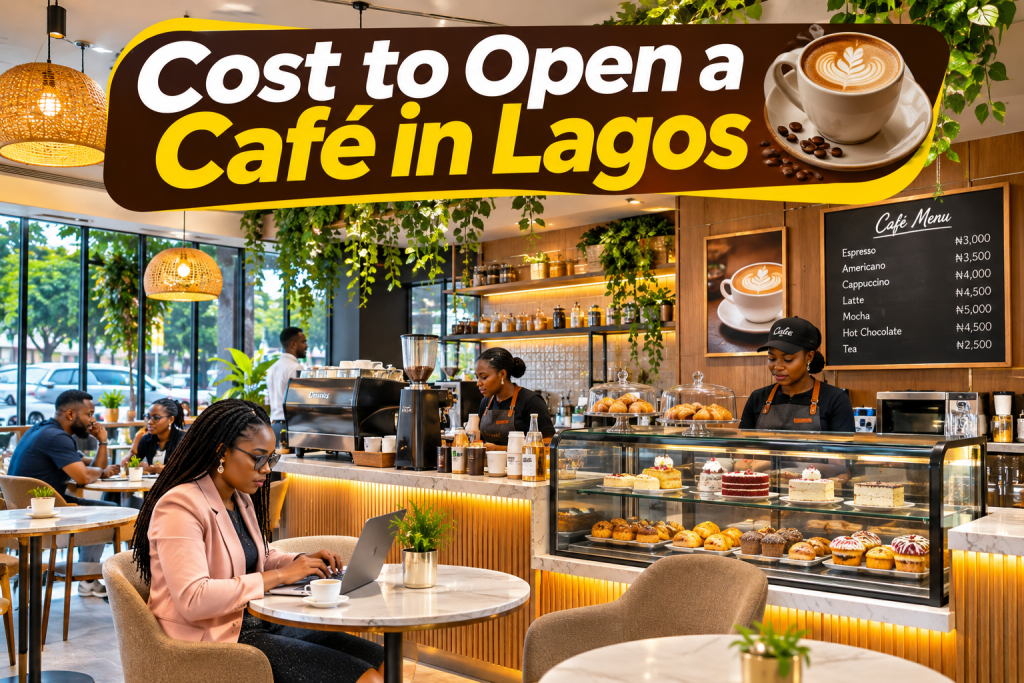
Opening a café in Lagos can be an attractive business opportunity, but the real cost goes beyond buying a coffee machine and renting a shop. You must budget for location, interior design, equipment, power, ingredients, staff and working capital. Whether you want a small takeaway coffee bar in Yaba or a premium café in Lekki Phase 1, this guide explains what to budget.
How Much Does It Cost to Open a Café in Lagos?
For preliminary planning in 2027, a café in Lagos could require approximately:
| Café format | Indicative startup capital |
|---|---|
| Small coffee kiosk or takeaway bar | ₦5m–₦12m |
| Compact neighbourhood café | ₦15m–₦30m |
| Standard 40–80 sqm café | ₦25m–₦50m |
| Premium café with extensive fit-out | ₦50m–₦100m+ |
| Large lifestyle café or restaurant-café | ₦100m–₦180m+ |
These are illustrative planning budgets, not market averages or contractor quotations. They assume different property sizes, equipment specifications, fit-out standards and working-capital requirements.
A fitted café that already has suitable electrical infrastructure, plumbing, air conditioning and furniture may cost considerably less to take over than an empty commercial shell.
The most important distinction is between opening capital and operating capital. You need enough money not only to open the doors but also to survive the first few months while customer traffic develops.
1. Choose the Right Café Business Model
Your business model determines almost every other cost.
A. Coffee kiosk or takeaway café
A kiosk may operate from 10–20 sqm in an office complex, shopping centre, university environment or busy commercial location.
Its menu might include espresso, cappuccino, iced coffee, tea, smoothies and pastries.
Advantages include:
- Lower rent and fit-out requirements.
- Fewer employees.
- Limited furniture and seating.
- Smaller equipment requirements.
- Faster service and simpler operations.
B. Compact neighbourhood café
A 25–50 sqm café can accommodate a small seating area, coffee counter, display fridge and basic food preparation.
It may serve residents, remote workers, students and nearby office employees.
C. Standard café
A 40–80 sqm café may provide 20–40 seats, a proper barista station, pastry display, customer toilets and a more developed food menu.
D. Premium lifestyle café
A premium café may occupy 80–150 sqm or more, with elaborate interiors, speciality coffee, full food service, outdoor seating and dedicated customer experience areas.
It requires more capital, but it can support higher-value transactions when the location and customer base justify the investment.
2. How Much Does Café Shop Rent Cost in Lagos?
Location is one of the largest financial decisions you will make.
A café in Victoria Island has a different rental profile from a takeaway coffee outlet in Yaba or a neighbourhood café in Surulere.
The following are indicative planning bands, not guaranteed asking prices for every street or property.
| Lagos location | Indicative annual rent per sqm |
|---|---|
| Lekki Phase 1 | ₦150,000–₦250,000 |
| Victoria Island | ₦100,000–₦300,000 |
| Ikoyi | ₦150,000–₦400,000 |
| Ikeja GRA / Allen / Opebi | ₦80,000–₦140,000 |
| Yaba | ₦60,000–₦120,000 |
| Surulere | ₦50,000–₦100,000 |
| Ajah / Sangotedo | ₦50,000–₦120,000 |
For example, a 50 sqm café in Lekki Phase 1 at an illustrative ₦180,000 per sqm annually would have an annual rent of:
50 sqm × ₦180,000 = ₦9 million per annum.
Remember that the initial property payment may also include agency fees, legal fees, caution deposits, service charges and other agreed expenses.
A property with a lower annual rent may still be expensive if it requires extensive renovation or has high service charges and power costs.
3. Café Equipment: How Much Should You Budget?
Your equipment budget depends on whether the café will sell only coffee and pastries or offer a broader menu.
| Equipment | Illustrative budget |
|---|---|
| Commercial espresso machine | ₦1.5m–₦5m |
| Commercial coffee grinder | ₦250k–₦1.2m |
| Blender and smoothie equipment | ₦100k–₦350k |
| Display refrigerator | ₦300k–₦900k |
| Commercial refrigerator/freezer | ₦500k–₦1.5m |
| Water filtration system | ₦120k–₦300k |
| Coffee accessories and barista tools | ₦150k–₦400k |
| POS and receipt printer | ₦150k–₦400k |
These are indicative budgeting allowances, not supplier quotations. Machine capacity, brand, condition, import costs and warranty support can change the final price considerably.
Do not buy equipment simply because it looks professional. Match machine capacity to expected daily orders.
A small takeaway outlet may not need a high-capacity two-group espresso machine. A busy café serving 100 or more drinks daily may need more substantial equipment to avoid service delays.
4. Interior Design, Furniture and Renovation Costs
The café environment is part of the product. Customers may visit for coffee, but they also pay for comfort, atmosphere, convenience and experience.
Your fit-out budget may cover:
- Flooring, painting and wall finishes.
- Ceiling and decorative lighting.
- Coffee counter and cashier station.
- Tables, chairs and sofas.
- Air conditioning and ventilation.
- Electrical installation and sockets.
- Plumbing and customer toilets.
- Shelving and product display.
- Signage and exterior branding.
For a compact 40–60 sqm café, an illustrative allowance of ₦4m–₦12m may be reasonable for a controlled fit-out, depending on the building’s condition and design specification.
Premium finishes, custom furniture, extensive joinery and structural alterations can push the budget considerably higher.
Prioritise practical workflow, ventilation, drainage, durable surfaces and comfortable seating before spending heavily on decorative features.
5. Electricity, Generator and Backup Power
A café depends on electricity for espresso machines, grinders, refrigerators, freezers, air conditioning, lighting, POS equipment and internet connectivity.
Potential costs include:
- Generator or shared generator contribution.
- Inverter and battery system.
- Electrical installation and distribution boards.
- Solar panels where suitable.
- Fuel and maintenance.
- Surge protection and equipment safety.
An illustrative initial power allowance could range from ₦1.5m to ₦7m or more, depending on the existing building infrastructure and equipment load.
Before signing a lease, ask an electrician to calculate the café’s power requirement. A property with insufficient electrical capacity can become an expensive problem after you have already paid rent.
6. Staff, Inventory, Registration and Marketing
A small café may initially require:
- One or two baristas.
- One cashier or service assistant.
- One cleaner or shared cleaning arrangement.
- A supervisor or manager, depending on the operating model.
You should also budget for coffee beans, milk, tea, syrups, chocolate, pastries, cups, lids, takeaway bags and cleaning supplies.
Other opening expenses include business registration, food-premises compliance, staff training, branding, menu design, photography and launch marketing.
The Lagos State environmental health framework requires food outlets to meet applicable hygiene and premises standards. Check the specific requirements for your premises and business activities before opening.
7. Example Café Startup Budget: 50 sqm Café in Lagos
Let’s consider a café opening in Yaba, Ikeja or a less expensive part of Lekki, occupying approximately 50 sqm.
Illustrative planning model, not a property quotation or guaranteed market price.
| Startup item | Estimated budget |
|---|---|
| Annual rent allowance | ₦7,000,000 |
| Agency, legal and caution allowances | ₦2,100,000 |
| Renovation and interior design | ₦6,000,000 |
| Coffee machine and grinder | ₦3,500,000 |
| Refrigeration and display equipment | ₦1,500,000 |
| Furniture and counter | ₦2,000,000 |
| Power and electrical installation | ₦3,000,000 |
| POS, internet and technology | ₦500,000 |
| Initial inventory and packaging | ₦800,000 |
| Registration and compliance allowance | ₦400,000 |
| Branding and launch marketing | ₦700,000 |
| Contingency | ₦2,000,000 |
| Estimated total | ₦29,500,000 |
The rent-related transaction fees above assume a 10% agency fee, 10% legal fee and 10% caution deposit calculated against annual rent. Actual fees are negotiable and should be confirmed in writing.
This example suggests that an entrepreneur could plan around ₦30 million for a reasonably equipped 50 sqm café, but a fitted property or smaller takeaway format could reduce the initial requirement.
It is also important to retain additional operating cash if the business is likely to need several months to establish consistent sales.
How Much Does It Cost to Run a Café Monthly?
Opening is only the beginning. Monthly operating costs determine whether the business survives.
A small café might prepare an initial operating budget like this:
| Monthly expense | Illustrative amount |
|---|---|
| Staff salaries | ₦900,000 |
| Electricity, fuel and utilities | ₦350,000 |
| Internet and software | ₦50,000 |
| Cleaning and maintenance | ₦100,000 |
| Marketing | ₦150,000 |
| Rent provision | ₦583,000 |
| Miscellaneous overhead | ₦117,000 |
| Estimated monthly fixed/semi-fixed costs | ₦2,250,000 |
This excludes variable costs such as coffee beans, milk, pastries, packaging and other ingredients. Actual payroll and operating costs depend on staffing, opening hours, equipment and location.
How Much Can a Café Make in Lagos?
Revenue depends on average customer spending and the number of transactions.
Consider this illustrative scenario:
- Average customer transaction: ₦5,000.
- Daily transactions: 50.
- Operating days: 26.
Monthly sales:
₦5,000 × 50 × 26 = ₦6.5 million.
If ingredients, packaging and other variable costs consume 35% of sales, the café retains ₦4.225 million as contribution towards fixed expenses and profit.
Using the illustrative monthly fixed/semi-fixed cost of ₦2.25 million:
₦4.225 million − ₦2.25 million = ₦1.975 million operating surplus before taxes, finance costs, depreciation and other unlisted expenses.
This is not a guaranteed profit forecast. It demonstrates how transaction volume, pricing and cost control influence the result.
Seven Strategies to Reduce Café Startup Costs
- Start with a focused menu: Offer a manageable selection of coffee, tea, smoothies and pastries before expanding into expensive food preparation.
- Choose the right property size: Avoid paying for 100 sqm when your business model can operate effectively in 40–50 sqm.
- Buy equipment according to demand: Match machine capacity to realistic daily order volumes rather than purchasing premium equipment too early.
- Consider fitted commercial spaces: Reusing suitable counters, plumbing, electrical installations and air conditioning can reduce renovation expenditure.
- Negotiate rent and fit-out time: Seek a rent-free fit-out period, staged payments or other landlord concessions where possible.
- Use local suppliers: Source suitable furniture, pastries, ingredients and packaging locally where quality and consistency are acceptable.
- Protect working capital: Keep sufficient cash for salaries, replenishment, utilities and marketing after opening instead of committing all your capital to rent and décor.
Where Are the Best Locations to Open a Café in Lagos?
Lekki Phase 1: Suitable for lifestyle cafés, speciality coffee, premium pastries and social dining. Competition and occupancy costs should be considered carefully.
Victoria Island: Attractive for corporate customers, business meetings, premium coffee and office-worker demand.
Ikoyi: Can suit premium cafés and high-end neighbourhood concepts where the customer base supports the pricing.
Ikeja GRA and Allen Avenue: Potential for breakfast, office coffee, casual dining and takeaway businesses.
Yaba: Offers opportunities around students, young professionals, technology businesses and educational institutions. Value pricing and convenience may be important.
Surulere: Can suit neighbourhood cafés, bakeries and affordable coffee-and-snack concepts.
Ajah and Sangotedo: Growing residential communities can support neighbourhood cafés, family-friendly concepts and takeaway businesses.
The best location is not necessarily the most expensive one. It is the location where your target customers live, work, study or regularly travel.
What Should Landlords Consider When Leasing to Café Operators?
A café tenant can be an attractive occupier because it may generate consistent customer visits and improve the commercial appeal of a building.
However, landlords should understand the operational requirements of foodservice businesses before leasing a unit.
Important considerations include:
- Adequate electrical capacity.
- Water supply and drainage.
- Exhaust and ventilation routes.
- Waste storage and collection.
- Grease management where food preparation requires it.
- Signage and customer access.
- Delivery rider access.
- Permitted foodservice use.
A property that is not designed for foodservice may require expensive modifications. Landlords who prepare suitable retail units can improve their appeal to café operators and other food businesses.
Frequently Asked Questions
1. Can I open a café in Lagos with ₦5 million?
Yes, but you will probably need a small kiosk, takeaway coffee bar or shared commercial location rather than a fully fitted sit-down café. You should focus on a limited menu, essential equipment, low occupancy costs and minimal renovation. A conventional café with seating, commercial equipment, staff and sufficient working capital will generally require a larger budget.
2. How much space do I need to open a café?
A compact takeaway coffee bar may operate from approximately 10–20 sqm. A small neighbourhood café may require 25–50 sqm, while a standard café with seating and food preparation may need 40–80 sqm or more. The right size depends on seating capacity, kitchen requirements, storage, toilets, customer circulation and delivery operations.
3. What equipment do I need to open a café in Lagos?
Essential equipment may include a commercial espresso machine, coffee grinder, water filtration system, blender, refrigerator, display fridge, coffee accessories, POS system and storage equipment. If you intend to sell food, you may also need an oven, toaster, microwave, food preparation surfaces and additional refrigeration. Build the equipment list around your menu.
4. Is Lekki Phase 1 a good location for a café?
Lekki Phase 1 can be suitable for premium cafés, speciality coffee shops, lifestyle concepts and takeaway businesses because of its commercial activity and residential catchment. However, rent, competition, traffic, parking and operating expenses can affect profitability. Compare several streets and properties, assess customer movement and calculate the sales required to cover total occupancy costs before committing.
5. How long does it take for a café to become profitable?
There is no guaranteed timeline. Profitability depends on rent, startup capital, pricing, customer traffic, ingredient costs, staff productivity and repeat purchases. Some cafés may reach operating break-even relatively quickly, while others may require many months of customer acquisition and operational improvements. Prepare a cash-flow forecast covering at least the first six months and test conservative sales assumptions before opening.
Conclusion: Plan the Café Before You Rent the Property
Opening a café in Lagos can require anywhere from a few million naira for a compact takeaway operation to over ₦100 million for a premium lifestyle concept.
The biggest financial decisions are the property, equipment, fit-out, power infrastructure and working capital. Getting these decisions right can reduce unnecessary spending and improve the café’s chances of long-term success.
For entrepreneurs, the objective should be to build a café that customers can afford, enjoy and revisit. For landlords and investors, the opportunity is to provide commercial spaces that support efficient foodservice operations.
UPG REALESTATE COMMERCIAL ADVISORS (+234-80-8460-1193) helps café entrepreneurs and foodservice investors identify suitable commercial locations, assess occupancy costs, negotiate leases and evaluate property opportunities across Lagos.
The right café location is not simply a beautiful space. It is a commercial asset that supports customer demand, operational efficiency and sustainable profit.