
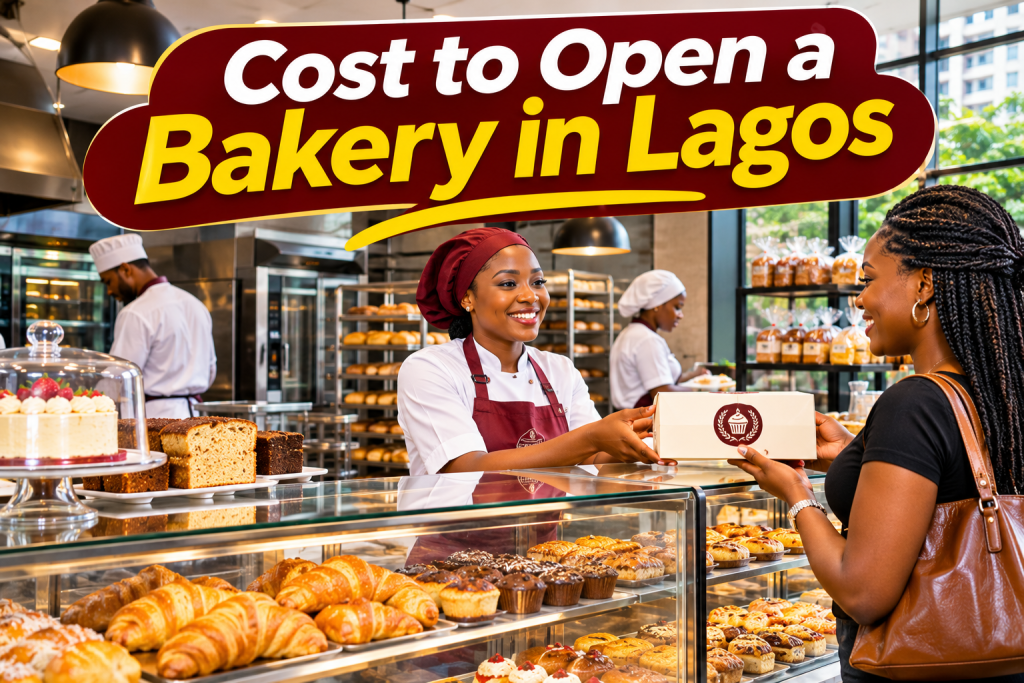
Opening a bakery in Lagos can be a profitable business opportunity, but success requires more than buying an oven and finding a shop. Entrepreneurs must budget for commercial equipment, suitable premises, electricity, ingredients, staff, packaging and working capital. Whether you are planning a neighbourhood bread bakery or a premium pastry shop, this guide explains what it could cost to get started.
How Much Does It Cost to Open a Bakery in Lagos?
The cost depends on the bakery’s production capacity, location, equipment, product range and property size.
For preliminary planning in 2027, consider these indicative startup budgets:
| Bakery format | Estimated startup capital |
|---|---|
| Small home-based or micro bakery | ₦3m–₦8m |
| Small neighbourhood bakery | ₦8m–₦20m |
| Standard retail bakery | ₦20m–₦50m |
| Commercial bakery with larger production capacity | ₦50m–₦120m |
| Industrial bakery and distribution operation | ₦120m–₦300m+ |
These are illustrative planning ranges, not verified market averages or supplier quotations. Actual costs depend on whether equipment is new or used, imported or locally manufactured, and whether the property is already fitted for food production.
A bakery producing bread for wholesale distribution will have very different requirements from a boutique bakery selling cakes, croissants, doughnuts and speciality pastries.
The first decision is therefore not how much money you have. It is what type of bakery you intend to build.
1. Choose the Right Bakery Business Model
Your bakery model determines your equipment, property requirements, staffing and startup capital.
A. Small neighbourhood bakery
A neighbourhood bakery may occupy 20–40 sqm and focus on bread, buns, meat pies, sausage rolls and other everyday baked products.
Its customers may include residents, commuters, schools, nearby offices and small retailers.
B. Retail bakery and pastry shop
A retail bakery may occupy 40–80 sqm, with a production area, customer counter, display cabinets and storage.
Products may include cakes, cupcakes, doughnuts, cookies, pastries, sandwiches and speciality bread.
C. Commercial production bakery
A commercial bakery may occupy 100–250 sqm or more. It produces larger quantities for supermarkets, restaurants, cafés, hotels, schools and retail distributors.
It requires greater production capacity, storage, staff, power infrastructure and delivery arrangements.
D. Premium artisan bakery
An artisan bakery may specialise in sourdough, croissants, European-style bread, premium cakes, speciality pastries and made-to-order products.
It may require more specialised equipment, skilled bakers and a carefully designed retail environment.
2. How Much Does Bakery Shop Rent Cost in Lagos?
Property selection is one of the most important financial decisions when opening a bakery.
You need a location that supports customer access, production, ingredient deliveries, storage, ventilation and waste management.
The following are indicative annual rent planning bands for commercial locations. Actual rents vary significantly by street, frontage, property condition, floor level and permitted use.
| Lagos location | Indicative annual rent per sqm |
|---|---|
| Lekki Phase 1 | ₦150,000–₦250,000 |
| Victoria Island | ₦100,000–₦300,000 |
| Ikoyi | ₦150,000–₦400,000 |
| Ikeja GRA / Allen / Opebi | ₦80,000–₦140,000 |
| Yaba | ₦60,000–₦120,000 |
| Surulere | ₦50,000–₦100,000 |
| Ajah / Sangotedo | ₦50,000–₦120,000 |
These are broad budgeting assumptions, not current verified quotations for every location.
Example: Renting a 60 sqm bakery in Lagos
Assume a bakery rents a 60 sqm property in Ikeja at an illustrative annual rate of ₦100,000 per sqm.
60 sqm × ₦100,000 = ₦6 million annual rent.
The tenant may also need to pay agency fees, legal fees, caution deposits, service charges and other agreed expenses.
For bakery operators, the cheapest property is not necessarily the best property.
A shop with poor ventilation, inadequate electrical capacity, limited water supply or no suitable production area can become more expensive to operate than a better-equipped property with higher rent.
3. Bakery Equipment: How Much Should You Budget?
Equipment is one of the largest startup expenses.
Your requirements depend on the products you intend to manufacture and the number of units you expect to produce daily.
| Equipment | Illustrative budget |
|---|---|
| Commercial baking oven | ₦2m–₦8m |
| Dough mixer | ₦800k–₦3m |
| Dough divider and rounder | ₦1m–₦4m |
| Dough sheeter | ₦800k–₦3m |
| Bread slicer | ₦400k–₦1.5m |
| Proofing cabinet | ₦500k–₦2m |
| Commercial refrigerator/freezer | ₦600k–₦2m |
| Stainless steel worktables | ₦250k–₦800k |
| Baking trays, racks and utensils | ₦300k–₦900k |
| Display cabinets | ₦400k–₦1.5m |
| Weighing scales and small tools | ₦100k–₦300k |
These figures are indicative allowances, not supplier quotations. Equipment capacity, brand, condition, installation, shipping, warranty and after-sales support can significantly affect the final cost.
Essential bakery equipment
Commercial oven: The oven is central to production. Choose one based on the products, tray capacity, heat distribution and expected production volume.
Dough mixer: Reduces manual labour and improves consistency when preparing bread, pizza dough, pastries and other products.
Dough divider: Helps standardise dough portions, product sizes and baking consistency.
Proofing cabinet: Provides controlled conditions for dough fermentation and proofing.
Refrigeration: Important for ingredients such as butter, cream, dairy products and other temperature-sensitive materials.
Display cabinets: Help retail bakeries present products attractively and maintain suitable storage conditions.
Avoid buying equipment simply because it is expensive or impressive. Select machines that match your production targets and available power supply.
4. Interior Design, Renovation and Bakery Fit-Out
A bakery requires a layout that separates production activities from customer service and storage.
Your fit-out may include:
- Flooring and washable wall finishes.
- Production counters and work surfaces.
- Electrical installation and distribution.
- Plumbing and drainage.
- Ventilation and extraction systems.
- Customer service counter.
- Display cabinets and shelving.
- Storage areas for flour and ingredients.
- Staff facilities and suitable sanitation arrangements.
- Exterior signage and branding.
For a 40–60 sqm retail bakery, an illustrative fit-out allowance could range from ₦4m to ₦12m, depending on the condition of the property and the complexity of the installation.
A production-focused bakery may require additional expenditure on ventilation, drainage, equipment foundations and power infrastructure.
Food production areas should be designed for efficient movement, cleaning and separation of raw materials from finished products.
5. Electricity, Gas and Backup Power
Baking is energy-intensive.
Commercial ovens, mixers, proofers, refrigerators, freezers, lighting and ventilation systems require reliable energy.
Depending on the equipment, a bakery may use electricity, gas or a combination of energy sources.
Potential expenses include:
- Generator or inverter systems.
- Gas installation and appropriate safety equipment.
- Electrical upgrades.
- Solar and battery backup where suitable.
- Fuel or gas consumption.
- Equipment servicing and maintenance.
An illustrative initial power and energy infrastructure allowance could range from ₦2m to ₦10m or more.
Before leasing a property, calculate the total connected load of the equipment. Confirm that the building can support the electrical demand and that any gas installation is safe, permitted and professionally designed.
Poor power planning can result in production interruptions, wasted ingredients and missed customer orders.
6. Ingredients, Packaging, Staff and Compliance
Your bakery will need a consistent supply of flour, yeast, sugar, butter, margarine, milk, eggs, salt, cooking oil and other ingredients.
Packaging costs may include bread bags, cake boxes, pastry containers, labels, stickers and takeaway bags.
A small bakery may initially require:
- One head baker.
- One or two assistant bakers.
- One sales attendant or cashier.
- One cleaner or production assistant.
- A supervisor or manager, depending on the business size.
You should also budget for business registration, applicable food-production approvals, food-handler requirements, staff training, product labelling and hygiene procedures.
Where packaged products are manufactured for sale, confirm applicable NAFDAC registration and labelling requirements before production and distribution. Also check relevant Lagos State environmental health and fire-safety requirements for the premises.
Do not assume that renting a commercial shop automatically authorises food manufacturing.
7. Example Bakery Startup Budget: 60 sqm Retail Bakery in Lagos
Consider a bakery opening in Ikeja, Yaba or Surulere, occupying approximately 60 sqm.
Illustrative financial model, not a supplier quotation or guaranteed market price.
| Startup item | Estimated budget |
|---|---|
| Annual rent | ₦6,000,000 |
| Agency, legal and caution allowances | ₦1,800,000 |
| Renovation and fit-out | ₦6,000,000 |
| Commercial oven | ₦4,000,000 |
| Dough mixer | ₦1,500,000 |
| Proofing cabinet and trays | ₦1,000,000 |
| Refrigeration and display equipment | ₦1,500,000 |
| Worktables and production tools | ₦800,000 |
| Power and energy installation | ₦3,000,000 |
| Initial ingredients and packaging | ₦1,000,000 |
| Registration and compliance allowance | ₦500,000 |
| Branding and launch marketing | ₦700,000 |
| Contingency | ₦2,000,000 |
| Estimated total | ₦29,800,000 |
The property transaction allowances assume agency, legal and caution fees of 10% each against the annual rent. Actual fees are negotiable and should be confirmed in writing.
This example suggests that an entrepreneur could plan around ₦30 million for a reasonably equipped retail bakery. A smaller operation with used equipment or an already fitted property may require less capital.
A larger wholesale bakery will need a separate production and distribution budget.
How Much Does It Cost to Run a Bakery Monthly?
Opening the bakery is only the beginning. Monthly operating expenses will determine whether the business can sustain production.
An illustrative monthly budget might look like this:
| Monthly expense | Estimated amount |
|---|---|
| Staff salaries | ₦1,000,000 |
| Electricity, gas and fuel | ₦450,000 |
| Rent provision | ₦500,000 |
| Maintenance and cleaning | ₦100,000 |
| Internet and administration | ₦50,000 |
| Marketing and promotions | ₦150,000 |
| Miscellaneous overhead | ₦150,000 |
| Estimated fixed/semi-fixed costs | ₦2,400,000 |
This excludes variable production costs such as flour, sugar, butter, yeast, eggs, packaging and other ingredients.
The actual cost structure depends on production volume, staffing, energy requirements and product mix.
How Much Can a Bakery Make in Lagos?
Bakery revenue depends on production capacity, product pricing, sales channels and customer demand.
Consider this illustrative scenario:
- Average customer transaction: ₦3,000.
- Daily transactions: 100.
- Operating days: 26.
Monthly sales:
₦3,000 × 100 × 26 = ₦7.8 million.
Assume ingredients and packaging account for 45% of sales.
Variable costs: ₦7.8 million × 45% = ₦3.51 million.
Contribution: ₦7.8 million − ₦3.51 million = ₦4.29 million.
Using the illustrative monthly fixed/semi-fixed costs of ₦2.4 million:
₦4.29 million − ₦2.4 million = ₦1.89 million operating surplus before taxes, finance costs, depreciation and other unlisted expenses.
This is an illustration, not a guaranteed profit forecast. It also assumes all 100 daily transactions are achieved and that the average transaction is ₦3,000.
For wholesale bakeries, the calculation should be based on units produced, units sold, selling price per unit, distribution costs and unsold or returned products.
Seven Strategies to Reduce Bakery Startup Costs
- Start with a focused product range: Begin with products that have reliable demand, such as bread, buns, meat pies and doughnuts, before introducing more specialised products.
- Choose a suitable property size: Avoid paying for excessive floor space that does not contribute to production or sales.
- Buy equipment according to production targets: Match oven capacity, mixer size and proofing equipment to realistic daily output.
- Consider fitted commercial premises: Existing drainage, electrical installations, ventilation and suitable counters can reduce fit-out expenses.
- Negotiate the lease: Request a fit-out period, staged rent payments or other concessions where possible.
- Control ingredient waste: Use standard recipes, accurate weighing, inventory records and production schedules to reduce waste and inconsistent product quality.
- Protect working capital: Keep enough cash for ingredients, salaries, energy, maintenance and distribution instead of spending the entire budget on rent and equipment.
Where Are the Best Locations to Open a Bakery in Lagos?
The best location depends on whether you are opening a neighbourhood retail bakery, a premium pastry shop or a wholesale production facility.
Lekki Phase 1: Suitable for premium bakeries, speciality bread, cakes, pastries and lifestyle-oriented bakery cafés.
Victoria Island: Can support premium pastries, corporate orders, office deliveries and bakery cafés serving business customers.
Ikoyi: Potential for premium artisan bakeries, speciality cakes and high-value residential customers.
Ikeja GRA and Allen Avenue: Attractive for neighbourhood bakeries, breakfast products, office deliveries and retail bread sales.
Yaba: Offers opportunities around students, young professionals, offices and residential communities. Affordable products and convenient access can be important.
Surulere: Suitable for neighbourhood bakeries, everyday bread, snacks and affordable pastries.
Ajah and Sangotedo: Growing residential communities can support neighbourhood bakeries, family customers and local distribution.
For large production bakeries, operators should also evaluate industrial and logistics locations such as Matori, Amuwo-Odofin and suitable parts of the Lekki-Epe and Ogun industrial corridors. These locations may offer more practical production and distribution arrangements than premium retail districts.
What Should Landlords Consider When Leasing to Bakery Operators?
A bakery can be an attractive commercial tenant, but the premises must support its operational requirements.
Landlords should assess:
- Electrical capacity and permitted energy installations.
- Water supply and drainage.
- Ventilation and extraction routes.
- Fire-safety provisions.
- Storage and delivery access.
- Waste management arrangements.
- Permitted food production and retail use.
- Signage and customer access.
A retail shop designed only for ordinary merchandise may not be suitable for a bakery without substantial modification.
Landlords who provide foodservice-ready commercial units can appeal to a wider pool of bakery, café and restaurant tenants.
Frequently Asked Questions
1. Can I open a bakery in Lagos with ₦5 million?
Yes, but you will likely need to start with a small home-based, shared-kitchen or micro-bakery operation. Focus on a limited product range, essential equipment and direct sales to customers or retailers. A fully fitted retail bakery with commercial ovens, staff, storage and sufficient working capital will generally require considerably more investment.
2. How much space do I need to open a bakery?
A small neighbourhood bakery may operate from approximately 20–40 sqm. A retail bakery with production and customer display areas may require 40–80 sqm, while a commercial production bakery may need 100–250 sqm or more. The right size depends on equipment, production volume, storage, staff circulation, customer access and delivery requirements.
3. What equipment do I need to open a bakery in Lagos?
Essential equipment may include a commercial oven, dough mixer, proofing cabinet, baking trays, worktables, refrigerator, weighing scales and production utensils. Depending on the product range, you may also need a dough divider, dough sheeter, bread slicer, display cabinet and packaging equipment. Select equipment based on your intended production capacity.
4. Is it better to open a bakery in a residential or industrial area?
A retail bakery generally benefits from proximity to residential customers, offices, schools and commercial activity. A wholesale production bakery may benefit from an industrial or logistics location with more practical production space, loading access and distribution routes. Some businesses can combine production in an industrial location with smaller retail outlets in residential and commercial districts.
5. How profitable is a bakery business in Lagos?
Profitability depends on production volume, selling prices, ingredient costs, energy expenses, labour, rent, distribution and unsold products. Bread and pastries can generate regular sales, but high production costs and wastage can reduce margins. A bakery should calculate contribution per product, daily sales targets and break-even volume before investing in equipment or signing a lease.
Conclusion: Build the Bakery Around the Business, Not Just the Building
Opening a bakery in Lagos can require a few million naira for a micro-bakery and well over ₦100 million for a large commercial production operation.
The most important decisions are the bakery format, property, equipment, power infrastructure, ingredient supply and distribution strategy.
For entrepreneurs, the objective is to build a bakery that produces consistently, controls waste and serves customers at prices they can afford. For landlords and investors, bakery-ready commercial properties can create opportunities to attract foodservice tenants and support the wider retail ecosystem.
UPG REALESTATE COMMERCIAL ADVISORS (+234-80-8460-1193) helps bakery entrepreneurs, foodservice operators and investors identify suitable commercial properties, assess occupancy costs, negotiate leases and evaluate retail and production locations across Lagos.
The right bakery property is more than a shop. It is the foundation of a production, retail and distribution business.